Patient Flow & Hospital Operations
Throughput, capacity, and length-of-stay strategy for acute care. We work with operations and clinical leadership to find the structural drag in your discharge engine.
A3HCS is a boutique advisory practice for hospitals, post-acute organizations, and life sciences teams operating across the acute-to-home continuum. We work in the friction points, discharge readiness, post-acute leakage, market access, and hospital adoption, where senior judgment and operational rigor move the numbers that matter.
The same federal price transparency rules that require hospitals to publish prices for patients should apply to the advisors who serve them. A3HCS publishes flat fees on every service line. No bait pricing. No "inquire for cost." No scope creep after signing.
Aligned with 45 CFR Part 180 . Hospital Price Transparency Final Rule
The only party paying A3HCS is the client engaging A3HCS. Every recommendation is priced into the fee you already agreed to.
A3HCS accepts no commissions, finder fees, or placement fees from any post-acute partner, vendor, or network it evaluates or recommends.
No rebates, revenue share, equity, or royalty from any drug, device, or software product assessed in an engagement. Adoption findings are not for sale.
Where an engagement touches a related A3HCS entity, DOMD Healthcare, A3HCS Liaison, or Brain Revives, the relationship is disclosed in writing before it is recommended, not after.
Most engagements start with a single, specific friction point. Pick the closest match. Each routes to the advisory lane built for it. We will triangulate adjacent issues during the diagnostic.
Boarding, throughput drag, discharge bottlenecks consuming capacity you cannot replace fast enough.
Patient Flow & Operations →Plans that look complete on paper but fall apart in the home, the SNF, or the caregiver living room.
Care Transitions →Post-acute partners you would choose vs. partners you actually use. The gap is margin and outcomes.
Post-Acute Strategy →Clinical evidence in hand. Hospital PT, KOL, and workflow integration remain unsolved.
Market Access & Adoption →A second opinion from a physician-executive who has sat in operations, life sciences, and the boardroom.
Executive Advisory →Brain injury, complex discharge, caregivers without a playbook. The downstream cost is readmission.
Brain Revives Bridge →A3HCS does not deliver generic transformation. Each lane has a specific buyer, a defined scope of work, and a measurable focus area. Engagements typically run six to twelve weeks for diagnostics, longer for execution partnerships.
Throughput, capacity, and length-of-stay strategy for acute care. We work with operations and clinical leadership to find the structural drag in your discharge engine.
The discharge decision is where time, margin, and trust converge. We diagnose handoff friction across hospitalist, case management, and post-acute partners.
Where your discharge volume actually goes vs. where it should go. We help acute systems build referral discipline, and help post-acute organizations earn the right referrals.
For life sciences and health tech teams entering provider markets. FDA pathway navigation, hospital adoption strategy, KOL engagement, and clinical workflow integration.
Retainer-style senior counsel for boards, CEOs, and CMOs. Discrete second opinions on capital deployment, M&A clinical diligence, service line strategy, and post-acute investment.
Workshop and curriculum design for clinical, operations, and life sciences audiences. Built by a physician-educator for adult learners who need to act on what they are taught.
For COO, CMO, CNO
ED boarding, discharge throughput, workforce burnout, and medtech adoption. Operational drag that ages your margin and your team in the same quarter.
For CIO, CISO, Compliance
HIPAA Security Rule gaps, vendor risk, and post-incident posture. Translate technical findings into board-ready language and a remediation plan you can fund.
For Medical Affairs and Commercial
Publications, KOL engagement, CME strategy, and field-medical enablement. Senior clinician oversight without the cost of a full-time medical director.
For Healthtech Founders and CEOs
Clinical customer discovery, ICP validation, and pilot design. Convert clinician interest into procurement-ready conversations before you burn the next round.
Our engagements move through four phases. The diagnostic comes first, always, because the cost of acting on the wrong diagnosis is paid by patients, margin, and your team credibility.
Structured interviews with operational, clinical, and financial owners. Data pull and variance analysis against peer benchmarks. No findings before facts.
2 to 4 weeksThe system map: where the loss is happening, who owns it, and what the realistic correction path looks like. Delivered as an executive memo, not a deck.
2 weeksWe work alongside your team, not above them. Protocol redesign, liaison role build, partner negotiations, workflow integration. We do the work where it counts.
8 to 16 weeksTracked metrics, defined at diagnostic, reviewed at cadence. We don't promise outcome guarantees. We commit to the right measurement frame and honest read.
OngoingMost healthcare systems do not have a strategy problem. They have a continuity problem. The work is to find the place where time, margin, and trust are leaking simultaneously, and to fix the system at that point, not at the symptom.Nitesh Kumar, MD MBA . Founder, A3HCS
A3HCS sits at the center of a small ecosystem of related entities. Each has a distinct audience and economic model. Brain Revives is the patient and caregiver education arm, related but not the primary commercial path.
Brain Revives is a patient and caregiver education platform for traumatic brain injury, stroke, and acquired brain injury recovery. When an A3HCS engagement touches the home, complex discharge, or post-acute caregiver activation, Brain Revives provides the education infrastructure most health systems do not have time to build internally. Brain Revives is education, not clinical care delivery.
Buyers engage A3HCS directly. Patients and caregivers engage Brain Revives. The arms share a clinical philosophy and a continuity discipline, but distinct audiences and economics.
Visit Brain Revives →One philosophy across four arms . distinct audiences
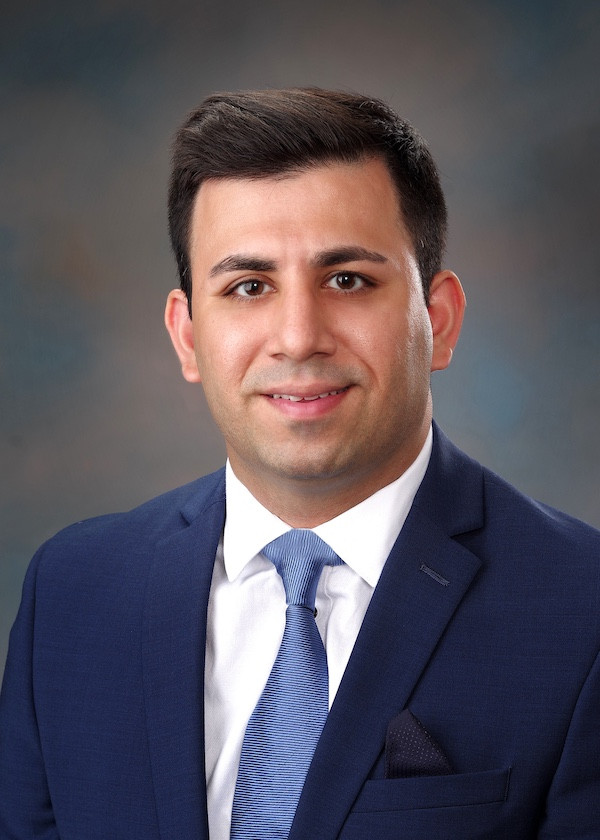
Nitesh Kumar . MD, MBA
Founder . A3HCS
ACHE . Six Sigma Black Belt . Physician-Executive
A3HCS is led by a physician-executive whose career spans pharmaceutical clinical strategy, acute hospital operations, post-acute care coordination, and patient recovery education. The work bridges two languages, clinical realities and operating discipline, that most healthcare consultants speak only one of.
Service-line strategy, throughput, discharge readiness, and quality programs across mid-market systems.
SNF, IRF, LTACH, home health, and hospice. Liaison program design and referral discipline.
Pre-launch hospital adoption, KOL engagement, PT navigation, and medical affairs architecture.
Curriculum design for clinical, operations, and life-sciences audiences. Built by a physician-educator.
A hospital crosses into point of no return territory when the losses are driven by forces leadership can't reverse. The tell is whether the next dollar invested still moves the needle. If it doesn't, you're no longer managing a turnaround; you're managing a wind-down.
Published analysis on healthcare operations, transitions, and life sciences adoption, written by Dr. Nitesh Kumar for NewsHX. Longer thinking lives on LinkedIn and in private memos to retainer clients.
Part 1 showed the Medicare hospice benefit has no network in either direction. This is the other tenth of the question, and in Illinois it has one name on the card: Blue Cross, which wrote 79.66% of the state's fully insured group premiums…
Read on NewsHX → Analysis . NewsHXOperators building home hospice census in Illinois keep asking whether to contract with every payer or stay out. For the benefit that is roughly nine-tenths of the revenue, neither option is on the table: hospice carves out to…
Read on NewsHX → Analysis . NewsHXVendor selection in durable medical equipment is moving from human judgment to a learned model, then to automation. The methodology described is more rigorous than most healthcare AI ever gets. The objective function is the part nobody…
Read on NewsHX →Engagements across post-acute, health systems, and life sciences. Anonymized by request.
What separates A3HCS from every other consulting firm we have used is that Nitesh has actually done the clinical work. He understood our ED-to-post-acute throughput problem in ten minutes because he has lived it from both sides. The recommendations were not theoretical. We saw measurable improvement within the quarter.
We were leaving reimbursement dollars on the table and did not know it. Nitesh audited our care coordination documentation across a sample of patient records and identified a consistent coding gap we corrected in the next billing cycle. The ROI on the engagement was measurable within sixty days.
We had been putting off our HIPAA security review for over a year. Nitesh identified three priority gaps in our risk analysis process and handed us a remediation roadmap we could execute without hiring a full-time compliance officer. Two months later we passed our state survey without a single finding.
The discharge huddle structure Nitesh designed cut our average LOS by over a day on our med-surg floors. What made it work was that he built it with bedside nurses, not around them. Staff actually use it.
I was skeptical that a consultant without a finance background could move the needle on throughput economics. He understood contribution margin and DRG mix better than most of our internal team. The ROI on the engagement was clear within 60 days.
Referrals from our hospital partners increased 40 percent after the liaison model redesign he recommended. He understood the SNF world from the hospital perspective in a way we had never encountered from an advisor. That dual lens is rare.
Scope, methodology, and deliverables. No pricing. Share with your leadership team before the call.
What we do, who we serve, what it costs, and how to start.
A3HCS (Advanced Healthcare Consulting Solutions) is a boutique physician-executive advisory practice founded by Nitesh Kumar, MD, MBA. It serves hospitals and health systems, hospice and home health agencies, life sciences companies, and digital health startups across operational diagnostics, compliance advisory, medical affairs, cyber risk, and clinical customer discovery. All engagements are flat fee, scoped in advance, and run directly by the founder. No junior associates, no staffed delivery teams.
A physician executive consultant reads clinical and financial data simultaneously, translating what the numbers say into the language a board, payer, or regulator will use to interpret the same data. At A3HCS, that means identifying the gap between your operational reality and how a reviewer reads it, then delivering a prioritized action sequence. The output is always an executive memo, not a slide deck.
Six active service lines: Hospital and Health System Operational Advisory, Hospice and HHA Diagnostic (CMS moratorium response), Healthcare Cyber Risk Advisory (HIPAA Security Rule), Life Sciences Medical Affairs Advisory (manuscripts, KOLs, CME), Health Tech Startup Clinical Customer Discovery, and Structured Healthcare Diagnostics. Each service line has flat-fee tiers published at a3hcs.org.
All fees are published and flat, no hourly billing. Diagnostic tiers are fixed: $2,500 for a 30-minute hospice/HHA diagnostic, $3,500 for a cyber risk snapshot, and $3,500 for a two-week DRG Impact Validation. Project-level engagements start at $5,000 for a 2-week hospital operational snapshot and $20,000 for a 6-8 week strategic advisory engagement. Retainers are quoted from a published floor that scales with organization size: $3,500+ per month for startup clinical advisory, $6,000+ for the fractional CAIO seat, $8,000+ for medical affairs, and $10,000+ for hospital and health system advisory. The floor is published, the scope is agreed in writing before you sign. No bait pricing, no scope creep.
Four primary buyer types: hospital and health system CEOs, COOs, and CMOs navigating operational, revenue cycle, or strategic pressure; hospice and home health agency owners facing CMS scrutiny or the May 2026 enrollment moratorium; pharma, medtech, and biotech medical affairs and regulatory teams; and pre-seed to Series A digital health and medtech founders who need clinical validation before building. Each buyer type has a dedicated service line.
Three differences. First, one physician executive runs every engagement, so the person who reads your data is the same person who delivers the memo and stands behind the recommendation. Large firms staff junior associates and have a partner sign off. Second, all A3HCS fees are flat and published, with no hourly billing and no open-ended scope. Third, the output is always an executive memo, not a multi-week PowerPoint process. You get the answer, not the deliverable that justifies the fee.
It means the clinical reasoning in your deliverable is reviewed by a physician before it reaches you. Every engagement is run and supervised by Nitesh Kumar, MD, MBA, so the operational recommendation and the clinical logic behind it are never separated and never handed to an analyst who can read only one of them. That is the supervision A3HCS provides: physician oversight of the advisory work itself. What it does not mean is care delivery. A3HCS advises organizations, not patients. No treatment decisions, no care delivery, no clinical supervision of your medical staff. Where a finding turns on a decision only your treating clinicians can make, the memo names the decision and routes it to them. Brain Revives, the patient and caregiver arm, is education infrastructure and not clinical care delivery.
Three hard boundaries. No clinical care: A3HCS advises organizations, not patients, and makes no treatment decisions. No legal or regulatory representation: A3HCS prepares you for a survey, an audit, or a board review, and does not represent you in one. Nothing in a memo is legal advice, and where a finding needs counsel, the memo says so and stops there. No reimbursement coding or billing: a diagnostic will find a coding or documentation gap and name it, because that is often where the margin is leaking, but correcting the gap and billing against it stays with your revenue cycle team or your coding vendor. Outside those three, scope is set at the diagnostic rather than assumed. If a finding points to work A3HCS is not the right party to run, the memo names the work and names who should do it.
Yes. Any engagement where protected health information is in scope runs under a signed BAA executed before the first data pull. The diagnostic is designed to work from aggregate and de-identified data wherever the finding does not require patient-level detail. Where patient-level review is necessary, as in a care coordination documentation audit, the scope, the sample size, and the handling terms are written into the engagement letter rather than negotiated afterward.
No. The diagnostic is a standalone, flat-fee engagement, and the executive memo is yours whether or not anything follows it. Some organizations take the memo to their board and execute internally, which is a legitimate outcome and often the right one. The diagnostic comes first in every engagement precisely so that neither party commits to execution before the problem is correctly named. There is no retainer conversion requirement and no auto-renewal.
Often yes, and usually as the second opinion rather than the replacement. A large firm is built to staff a workstream. A3HCS is built to tell you whether the workstream is aimed at the right thing. The Executive Advisory lane exists for exactly this: a strategic call your team, or your incumbent advisor, is too close to make. Engagements that run alongside an existing firm are scoped narrowly and in writing so there is no ambiguity about who owns which recommendation.
Yes. A3HCS works with healthcare organizations nationwide. Hospital and health system engagements are strongest in the Midwest, across Wisconsin, Illinois, Indiana, and Michigan, but are not limited by geography. The hospice and HHA diagnostic is specifically relevant to operators in the six CMS-named program integrity states (AZ, CA, NV, TX, OH, GA) but available nationwide. Life sciences and startup engagements are location-independent.
Submit the diagnostic request form at a3hcs.org. It takes under two minutes. The form routes to the founder directly, not to a sales team or auto-reply sequence. Expect a personal reply within two business days with a scoping call slot. If you know which service line fits, you can go directly to that page (Hospital, Hospice/HHA, Cyber, Life Sciences, Startups, or Diagnostics) and submit from there. All engagements start with a diagnostic before any execution work begins.
The diagnostic request form routes to the founder and gets a personal reply within two business days. A scoping call typically happens inside the following week, and a diagnostic can begin as soon as the engagement letter and, where applicable, the BAA are executed. Because one person runs every engagement, capacity is genuinely finite. If the calendar cannot accommodate the timeline you need, you will be told at the scoping call rather than after signing.
A two-to-four-week structured diagnostic delivered as an executive memo, not a deck. It defines where your system is losing time, margin, and trust, and identifies the two-to-three corrections worth investing in next.