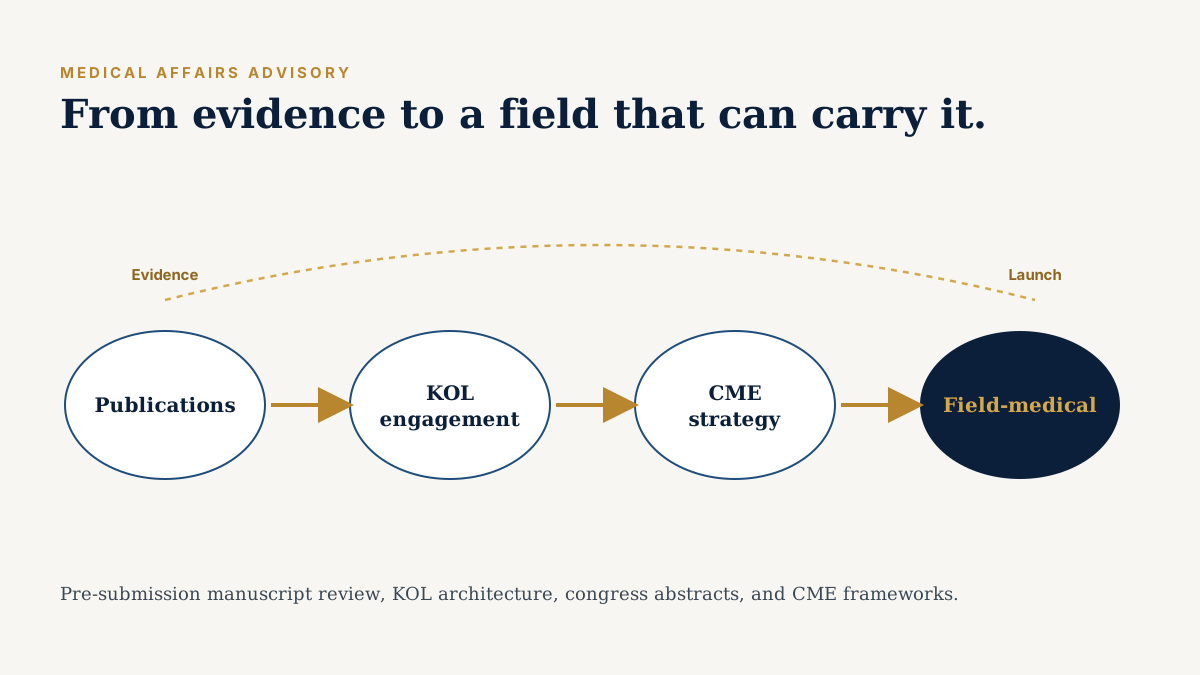
What does a physician medical affairs advisor actually do?
Reads manuscripts before submission, provides clinical-accuracy review, helps identify and brief KOLs for advisory boards or congress podiums, contributes to publication strategy, reviews congress abstracts, and serves as clinical voice in CME content development. Distinct from clinical research operations and regulatory affairs. Sits between science and the clinical audience.
How is this different from hiring a contract medical writer or a medical communications agency?
Medical writers produce manuscripts. Agencies coordinate publications strategy. A3HCS sits one layer up. The physician reviewer who reads the manuscript as the target clinical audience will, sharpens overreaching claims, identifies credible KOLs, and signs off on accuracy before submission. We work alongside writers and agencies, not instead of them.
How much does life sciences advisory cost?
Tier 01: Single Publication Review at $5,000. Tier 02: Medical Affairs Package at $20,000 over four to six weeks. Tier 03: Ongoing Medical Affairs Retainer from $8,000 per month with a three-month minimum. All flat fees published. No bait pricing.
What is medical affairs advisory and when do life sciences companies need it?
Medical affairs advisory is the editorial and strategic layer between your science and the clinical audience. You need it when a manuscript is ready for submission but has not been reviewed by the physician who will read it in practice, when you are identifying KOLs for an advisory board or congress podium, when CME content needs clinical-accuracy review, or when a P&T committee needs your drug or device positioned correctly.
What types of life sciences companies use this advisory?
Pharmaceutical companies preparing manuscripts for high-impact journals, medtech companies building KOL programs ahead of a product launch, digital health companies developing CME or continuing education content, and biotech medical affairs teams managing congress abstract strategy. Company stage ranges from late clinical-stage to commercial.
How does A3HCS support KOL identification and advisory board planning?
KOL identification starts with the target clinical audience and works backward — who publishes in this therapeutic area, who presents at the relevant congress, who sits on the relevant guideline committee. A3HCS maps that landscape, identifies credible candidates, and produces a KOL briefing document your medical affairs team can use for outreach and advisory board design.
Are life sciences advisory engagements conducted under NDA?
Yes. Every engagement begins with a mutual NDA before any manuscript, data, or proprietary strategy is shared. References from prior engagements are available under NDA for qualified prospects after an initial scoping call.
What stage of product development is life sciences advisory most useful?
Most useful at three points: late Phase 2 or Phase 3 when publication strategy and KOL engagement need to be in motion before data readout, at launch when medical affairs is standing up the advisory board and congress presence, and in the post-launch commercial phase when ongoing CME and publication support is needed to maintain clinical credibility.